AI-assisted requirements derivation for space missions
98% of engineering implications captured from mission briefs and ECSS standards
- Starbound Space Solutions
- 2026
- Requirements
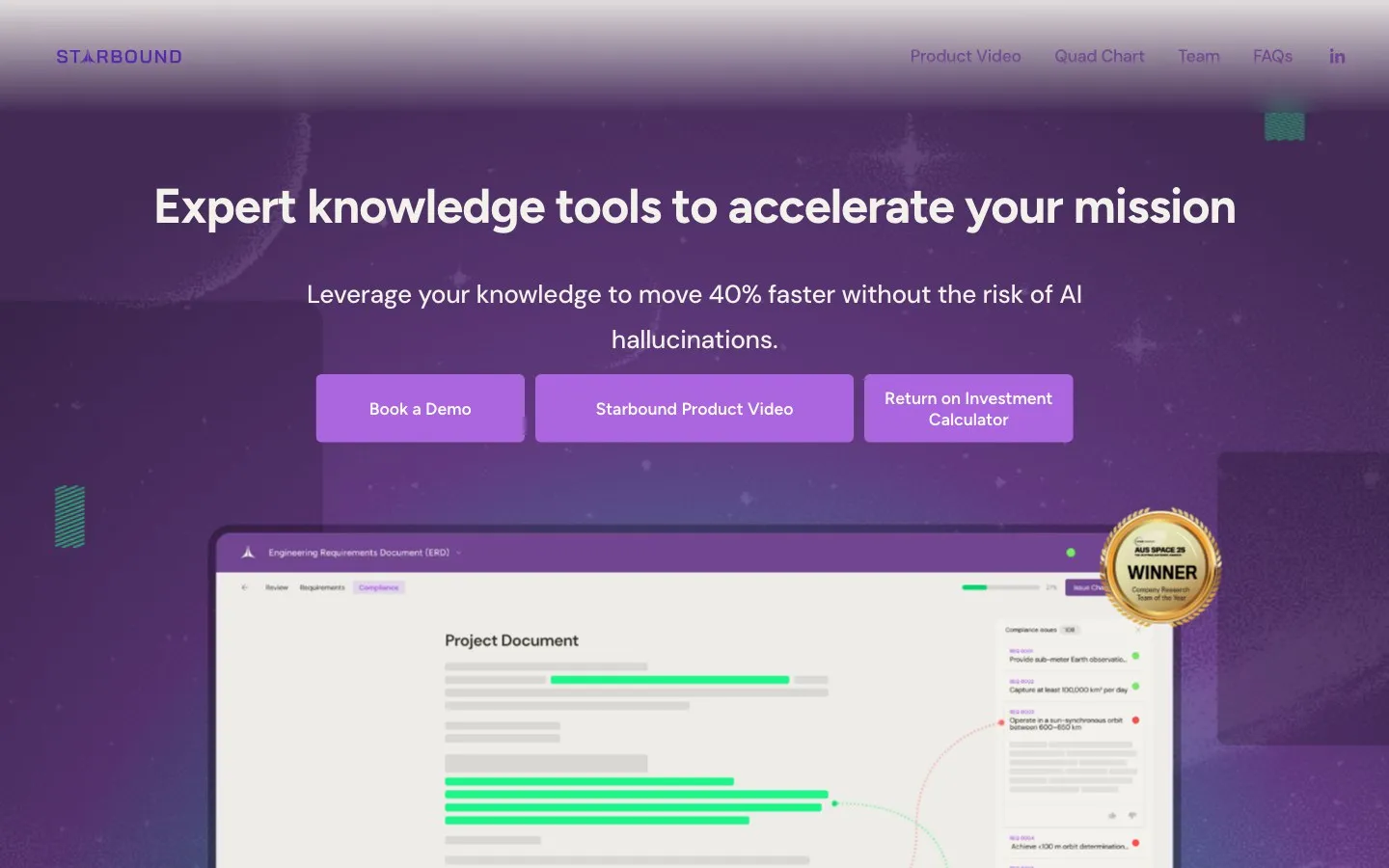
Turning mission briefs and ECSS standards into structured, traceable engineering requirements.
Project information
- Starbound Space Solutions
- 2026
- TypeScript, NestJS, Prisma, PostgreSQL, Docker, On-prem LLMs
- 98%, of engineering implications captured from mission briefs and ECSS standards
The problem
Space missions are governed by long, interlocking regulations and standards such as the ECSS series. Turning a mission brief into a complete set of engineering requirements is slow, manual work, and missing an implication early is expensive later.
What I built
- Requirements derivation. AI-assisted functionality that reads space mission briefs alongside ECSS regulations and standards and derives the engineering requirements they imply.
- Structured, traceable outputs. ReqIF 1.2 exports and attribute-gap reports, so extracted requirements arrive in a format engineers can review, exchange and trace.
- Production backend. On-premises LLM services behind a TypeScript, NestJS, Prisma and PostgreSQL backend.
- Verification. CI/CD pipelines with Docker-based verification and automated schema, round-trip and integration testing.
Results
- 98% of the engineering implications in a mission brief and its applicable standards captured by the derivation.
- My work contributed to a team-wide 40% reduction in documentation time.
Related research
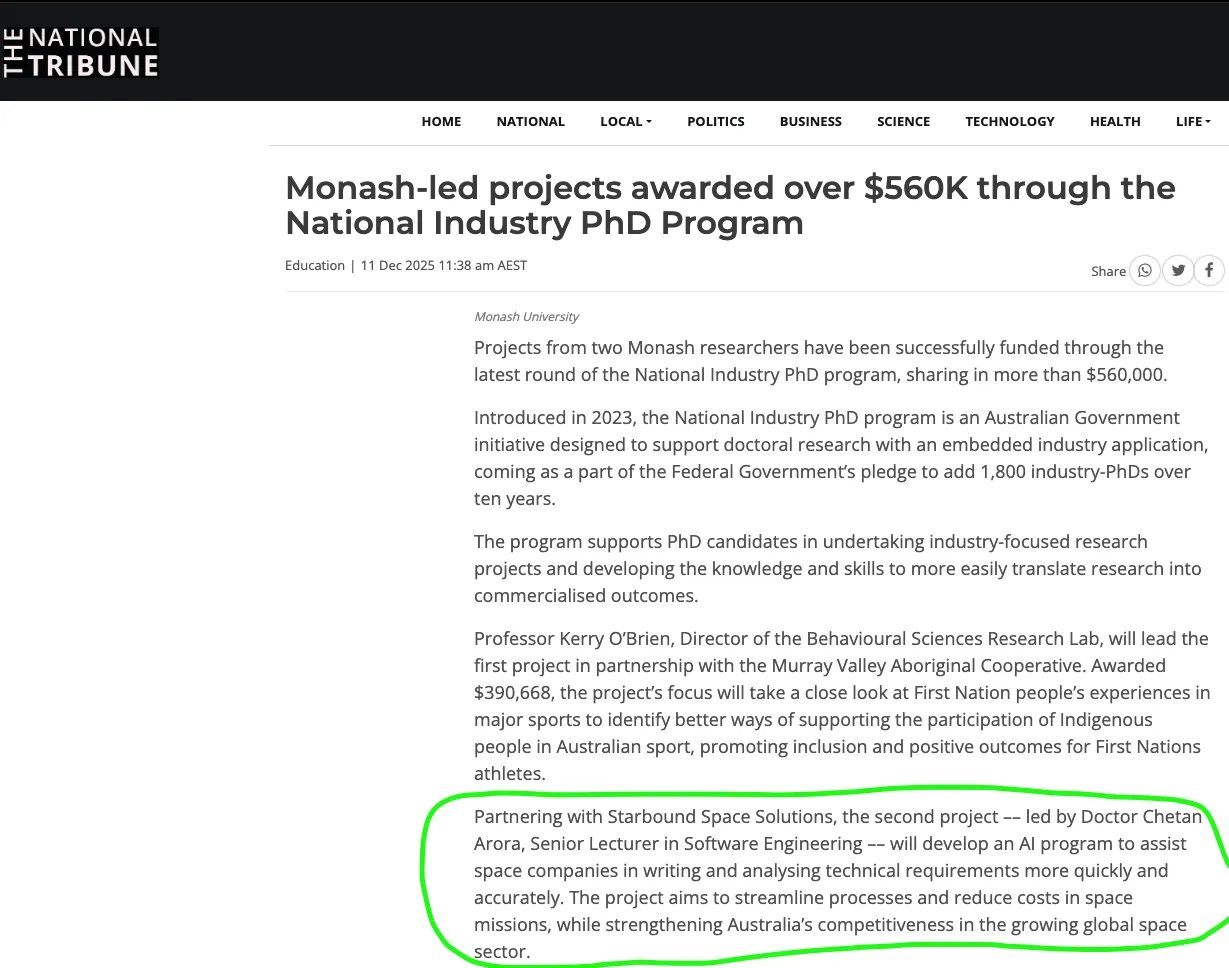
My PhD at Monash University studies generative-AI methods for regulatory compliance in safety-critical domains, starting with the Australian space sector.
Gallery
98%of engineering implications captured from mission briefs and ECSS standards